Home Blog Page 58

Reimagining the Egungun Festival: Honoring Tradition, Embracing the World || Idris Animasaun
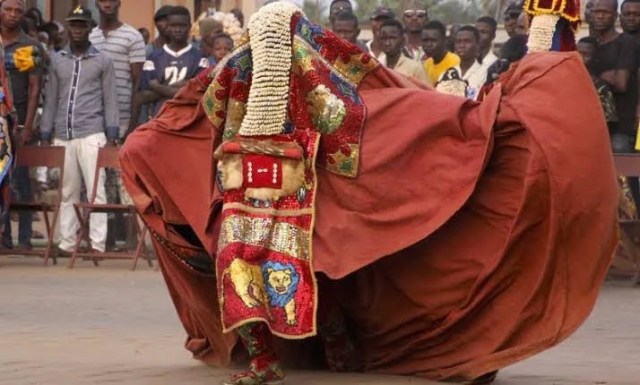
 

The Egungun Festival, an age-old cultural celebration deeply rooted in the spiritual and social fabric of Yoruba land, has once again come alive. As the revered masquerade—Jalaruru paid homage to the palace earlier in the day, his vibrant entourage stretched from the royal grounds to Queen Elizabeth Road, capturing the admiration and participation of the people. The scene was a reminder of our rich heritage, and a glimpse into what the future of this cultural event could look like.

One can only imagine the electrifying moment if a proud son of the soil, like the legendary Fuji icon Obesere, led the file-out in grand style. Such a moment would not only reinforce community pride but also mirror the visual elegance and unity seen at events like Ojude Oba in Ijebu land, where families turn out in coordinated splendor to honor the Awujale. There is so much potential here—ripe for expression, celebration, and elevation.

Over time, the Egungun festival has remained a sacred traditional rite, respected for its spiritual significance and ancestral connections. However, as with all living traditions, there is room to evolve—not in substance, but in presentation. Recently, Wasiu Ajani Adewale Olatubosun hosted the World Egungun Festival, an effort aimed at globalizing the masquerade culture. It is a brilliant idea, one that should not stand alone but be harmonized with the original festival we all grew up identifying with.

There is now a growing call—indeed, a cultural imperative—to rebrand the Egungun Festival without diluting its essence. By doing so, we can create an experience that honors our forebears while inviting the world to witness and participate in our heritage. Such rebranding doesn’t mean commercialization; rather, it is about improving structure, creating relatable moments, attracting tourism, and sustaining cultural pride among younger generations.

The Blueprint for Rebranding

Traditionally, the Egungun rites span over one to two weeks, involving spiritual cleansing, ancestral homage, and community bonding. This core should remain untouched. However, following the ritual period, we propose a grand concert-style event—a modern cultural carnival featuring:
• A replica parade of various Egungun types, with explanations of their meanings and origins
• Artistic performances rooted in Yoruba tradition, led by local and international entertainers with ties to the culture
• Exhibitions and markets showcasing Yoruba crafts, fashion, and cuisine
• Workshops and storytelling sessions for children and tourists to learn about the Egungun’s purpose and history
• Partnerships with tour operators to draw visitors from Nigeria and abroad

This dual-layered celebration would protect the traditional rites while opening up new economic and cultural opportunities for the host community. It would also serve as a platform for cultural education and intergenerational connection—two things often missing in today’s fast-paced, globalized world.

The Role of Cultural Icons and Stakeholders

Icons like Obesere, Taye Currency, Tiri Leather and all others, who personify the fusion of Yoruba tradition and popular culture, can serve as powerful ambassadors for this evolved festival. Their participation, especially in ceremonial or symbolic roles, would draw attention to the celebration while lending it authenticity and appeal.

Cultural stakeholders, including traditional rulers, local governments, ministries of culture and tourism, and creative industry players must come together to support this initiative. Institutions like the Oyo State Ministry of Culture and Tourism can take the lead in developing a formal framework for the festival’s expansion, while maintaining respect for the traditional custodians of the Egungun rites.

Conclusion: Preserving the Soul, Sharing the Spirit

The Egungun Festival is more than a celebration—it is a bridge to the past and a gift to the future. As the world searches for meaning, roots, and authentic cultural experiences, Yoruba land stands with an offering that is both spiritual and spectacular.

By thoughtfully rebranding the Egungun Festival, we are not only preserving a legacy; we are also inviting the world to understand it, celebrate it, and respect it. We are telling our story in our own voice—and showing that tradition can evolve without losing its soul.

Indeed, it is doable. The time is now.

Idris Animasaun is a culture and heritage preservation enthusiast.

Oyo South Senator, Alli Mourns Later on Pa Ojewola, Hails Deceased’s Progressive Legacy

Senator Sharafadeen Alli (APC-Oyo South) has expressed deep sorrow over the passing of Chief Samuel Olatayo Ojewola popularly known as Baba Oku

This is contained in a statement signed by his Media Office and made available to newsmen on Sunday in Ibadan.

Senator Alli described the late Pa Ojewola as a man of pedigree, uncommon honesty and unflinching commitment to progressive ideals.

He said that the death of this statesman, who passed away on Saturday, June 21 at the ripe age of 89, was a huge loss to the progressive family and the entire Ibarapa zone.

Senator Alli extolled the late Chief Ojewola as a dogged fighter and a consistent advocate of justice, equity and egalitarianism.

He said the deceased remained unwavering in his loyalty to progressive politics right from the days of the Action Group till the present-day All Progressives Congress (APC).

He recalled Chief Ojewola’s invaluable contributions as the Great Leader of APC in Idere, a prominent member of the Group of 9 APC Elders in Ibarapa, and an active pillar within the Ibarapa APC Elders Consultative Forum.

“Baba Oku was a unifying force whose wisdom, guidance and wealth of experience were instrumental in stabilising the party structure in Ibarapa,” he added.

Senator Alli noted that the late Chief lived a fulfilled life marked by dedication to communal development and principled political engagement.

He urged the family, the APC in Ibarapa, and the people of Idere to take solace in the impactful life he led, and the legacy of truth, fairness and service he left behind.

The lawmaker prayed that Almighty God grant the soul of the departed eternal rest and give his family and loved ones the fortitude to bear the irreparable loss.

Renowned Journalist, Soyombo Fires Makinde Over N63bn Govt House Renovation Proposal


Governor Seyi Makinde of Oyo State has come under scrutiny following revelations that his administration is proposing to spend a staggering ₦63.5 billion to renovate the government house in Ibadan.

The development sparked widespread reactions after investigative journalist ’Fisayo Soyombo, via his verified social media account on X (formerly Twitter), questioned the timing, necessity, and implications of the proposed expenditure.

Soyombo pointed out that Governor Makinde, who assumed office in 2019, has already completed over 76 percent of his constitutionally allowed two-term tenure and is expected to leave office in less than two years. Despite this, the governor is now seeking to renovate a facility he and his deputy have not resided in since assuming office.

“Makinde and his deputy, by the way, have lived in their private residences throughout their tenure. Renovating an edifice you don’t live in and when you’re on your way out with the equivalent of the state’s 2024 IGR?” Soyombo wrote in the post shared on Friday evening.

The journalist further hinted at public suspicions surrounding the proposed spending, stating, “You and I know why Makinde needs that ₦63.5bn; you want me to say it but I won’t. Say it yourself!”

Responding to the criticism during a special plenary at the Oyo State House of Assembly on Friday, Governor Makinde attributed the high cost of the project to the depreciation of the naira.

According to the governor, exchange rate volatility has also driven up the cost of servicing the state’s external debt, particularly a $200 million loan secured by the administration of former Governor Abiola Ajimobi.

“When we assumed office, our monthly repayment stood at ₦700 million. But as of now, we are compelled to pay ₦3 billion monthly,” he explained.

Amofin Beulah Adeoye Celebrates Oyo SUBEB Chairman, Dr Nureni Adeniran On His Birthday

It is not every day that we celebrate not just a man, but a towering force of intellect, integrity, and service. On this special occasion of his birthday, I join millions across Oyo State, Nigeria, and beyond in paying tribute to a man I consider not only a mentor and leader, but a brother and a friend. Dr. Nureni Aderemi Adeniran is not simply a public figure; he is a phenomenon. And as someone privileged to have walked beside him over the years, I speak not just from admiration, but from experience.

To understand the measure of the man is to appreciate the extraordinary depth of his intellect. With a Ph.D. in Communication Arts and Community Development from the University of Ibadan and a Law degree (LL.B. Hons.), Dr. Adeniran represents a unique blend of academic rigor and legal insight. Yet these credentials—impressive as they are—barely capture the scope of his wisdom or the grace with which he applies it.

In every sphere he has served—whether as a lecturer at Kaduna Polytechnic or Lead City University, or in government—Dr. Adeniran has brought both heart and intellect to bear. His students speak of him as a beacon of clarity and discipline. His colleagues speak of his unwavering principles and quiet strength. And we, his contemporaries, continue to marvel at his capacity to lead without arrogance, to serve without spectacle, and to build without seeking applause.

His record in public service is profound. As Chairman of Ibadan South West Local Government, he showed us what people-centered leadership truly means. Later, as Commissioner for Industry, Applied Science and Technology—and subsequently Commissioner for Education, Science and Technology—he broke barriers, resolved entrenched challenges, and uplifted the state’s education system in ways we still feel today.

I recall vividly the turbulent state of affairs when he became Education Commissioner. Teachers’ salaries were unpaid, morale was at an all-time low, infrastructure was collapsing, and public trust was waning. Yet within a short time, Dr. Adeniran achieved what many believed to be impossible—he cleared salary backlogs, renovated dozens of schools, reintroduced open-day policies to reconnect teachers with parents, and re-established accountability through unannounced school inspections. Under his stewardship, Oyo State’s basic education ranking jumped from 27th to 11th nationally. That is not just governance—it is legacy.

Now, as Executive Chairman of the Oyo State Universal Basic Education Board, he has continued that legacy with undiminished vigor. More than 7,000 teachers and 1,000 caregivers have been recruited during his tenure. Classrooms across urban and rural Oyo State are experiencing real transformation. Educational policies have become more inclusive, and hope has returned to our schools.

What many do not know is that during the last round of computer-based teacher recruitment examinations, while physically indisposed, Dr. Adeniran remained present every day to ensure a smooth process—only tending to his own health after the job was done. In his characteristic way, he continues to put others first.

Beyond all his public accomplishments, it is his loyalty and humanity that most define Dr. Nureni Aderemi Adeniran in my eyes.

There was a time—those vibrant Lagos days—when his residence became our political and intellectual headquarters. Sunday afternoons were sacred. The “Amala ritual,” as we fondly called it, was more than a meal; it was a communion. He would never begin without calling out to me—“Beulah,” he’d say, in that warm and persuasive voice, “come, the elders are here.” Around that table, over steaming plates and spirited conversations, politics, law, and policy were born. Friendships were forged. Wisdom flowed freely until dusk.

Even now, I continue to turn to him—not just for political strategy but for counsel rooted in values. His door is always open, his ears always attentive, his advice always grounded and sincere. In a world obsessed with noise and bravado, Dr. Adeniran’s calm is his greatest strength. In circles where ego dominates, his humility commands unmatched respect.

He is a servant-leader in the truest sense—one who leads from the front, but is equally willing to lift from behind. That he returned to teach at his own alma mater, Muslim Grammar School, Odinjo, speaks volumes about his humility. That he treats the most junior staff with the same respect as the highest official reflects the essence of his soul. There is no corner of Oyo State he has not touched—and always with intention and compassion.

His contributions to the Muslim community are also deeply impactful. He has revitalized the OYOSUBEB mosque, instituted regular Friday prayers, hosted statewide Ramadan lectures that attract scholars and citizens alike, and championed interfaith understanding with quiet dignity. During the uncertainty of the pandemic, he provided both reassurance and leadership. Today, he is more than a public servant—he is a spiritual and moral anchor for many.

It is no surprise, then, that he was elected Chairman of the South-West SUBEB Chairmen Forum, representing six states. In this capacity, he continues to promote regional collaboration and educational reform. Yet despite the prestige of this role, Dr. Adeniran remains grounded—walking among the people, not above them.

For me, and for many others, Dr. Adeniran is the rare kind of leader whose greatness is measured not by titles, but by trust; not by ambition, but by legacy.

As I reflect on our years of friendship, I feel deeply honored to have witnessed a life lived in full alignment with purpose. His journey reaffirms that public service, when done with integrity, remains noble. That politics, when guided by conscience, can still uplift. That leadership, when rooted in love for others, can still transform lives.

Dr. Adeniran, today we celebrate more than your birthday—we celebrate your example. We thank you for every reform, every kind word, every sleepless night in service to your people. We honor your intellect, your dignity, your faith, and your strength. And we pray that the years ahead bring you continued joy, health, and the opportunity to shape generations to come.

You have given so much to your people, your faith, and your nation. May history remember you as you are remembered today—not merely as a man of power, but as a man of peace. Not just as a public figure, but as a moral compass. Not just as a leader, but as a light.

Happy birthday, Dr. Nureni Aderemi Adeniran.
Oyo State salutes you. Nigeria honors you. And I, Amofin Beulah Adeoye, remain forever proud to call you my egbon.

Proposed Government House Renovation; A Clear Path to Wasteful Spending || Kazeem Olalekan

There is absolutely no justification for the extravagant ₦63.4 billion budgeted for renovation of Oyo State Government House. No reasonable or conscientious citizen should support such reckless spending, especially when the same amount could transform the education or health sectors, which are both in dire need of investment. That amount could build functional primary health centres across all 33 local government areas, or massively upgrade State government hospitals and schools.

This same government house has been abandoned since Governor Seyi Makinde assumed office. The last known occupant was Alao-Akala. If it has remained unused for so long, why the sudden urgency to renovate it especially with such an outrageous sum? It seriously raises red flags about the intent behind the project.

Since this news broke, I have attempted to find any record of consistent funding or maintenance allocations to the government house since Seyi Makinde came onboard. None surfaced. The reason was to engage objectively, relying on facts. While there are reports that the Ajimobi administration allocated funds for similar purposes, the public deserves to know how that money was spent. Transparency should not be optional in governance, it is essential. And, if Seyi Makinde had been consistent in maintaining it since he came onboard, there would not have been need for “total overhaul”.

More disturbing is the irony of the Governor lamenting the “steep increase” in Oyo’s foreign debt repayment obligations. If that is indeed true, how can he justify spending ₦63.4 billion on what is clearly a luxury? In times of economic constraint, a responsive government should lead by example, cutting down on waste and shelving non-essential projects. This renovation cannot pass the test of necessity, urgency, or economic prudence. It reeks of misplaced priorities.

The Governor is essentially saying to the people: “I’ll live in luxury, while you endure poverty.” With Oyo State ranked among those with the highest numbers of out-of-school children and poor health indices, this project is not only tone-deaf, it is immoral. It shows a disconnect from the real and immediate needs of the people.

If the Governor had taken these funds and deployed them into building modern classrooms, equipping science labs, revamping primary healthcare centres, or fixing the State’s water infrastructure, he would have been praised. Instead, he has chosen opulence over the people. This is not just poor judgment, it is a fundamental failure in leadership.

Recently, I raised the alarm on the growing rate of open defecation in the State. Though the government quickly formed a 20-member committee led by the Secretary to the State Government, no concrete action has followed. Setting up committees is not the same as governance. The government must commit to building public toilets and fixing water supply systems. These are basic services that would cost far less than ₦63 billion.

To be clear, no one denies that the government house may need renovation after years of neglect. But the questions remains: why now? Why this much? Why wasn’t it done in his first term when state? Why spend this much during a period of economic uncertainty and rising debt repayments?

This is not just a budgetary issue; it is a governance crisis. A government that continues to sell State-owned assets like the Ogunpa Dam Forest Reserve which houses Agodi Zoological Gardens, and Trans Amusement Park, amongst others, should not be spending billions on luxury projects. That signals a troubling trend; selling public assets to fund elite comfort, not public development.

Let us also not forget the role of the legislature in this matter. They are meant to serve as a check on the executive, ensuring that public funds are used judiciously. Unfortunately, the silence from the Oyo State House of Assembly is deafening. Their failure to question or scrutinize this project amounts to complicity. They have a constitutional duty to conduct proper oversight and protect the interests of the people. That duty appears to have been abandoned.

Governor Makinde must be reminded that good governance thrives on accountability and transparency. The people have the right to know the full scope of this renovation: the contractors involved, the bidding process, timelines, breakdown of expenses, and more. Without such disclosures, this project will continue to be viewed as a conduit pipe for waste and corruption.

In conclusion, this is more than just about ₦63.4 billion. It is about values, vision, and leadership. A governor who claims to feel the economic pains of the people cannot, in good faith, approve such spending while critical sectors are underfunded. This is not just wasteful, it is shameful. Governor Makinde must retrace his steps. Oyo State deserves better. The people deserve leaders who serve, not rulers who indulge.

Kazeem Olalekan Israel (GANI) writes from Ibadan, Nigeria.

6 Years After, Nothing Has Been Done At Agbowo Shopping Complex – Lawmaker, Babajide, Tells Makinde


Hon. Babajide Gabriel, the lawmaker representing Ibadan North II Constituency in the Oyo State House of Assembly, has raised fresh concerns over the long-abandoned Agbowo Shopping Complex, describing the delay in its redevelopment as a significant loss to the state.

Speaking on the floor of the House during Friday’s plenary, Hon. Babajide expressed disappointment that six years after the state government announced plans to rehabilitate the once-vibrant complex, it remains non-functional and locked in a state of inertia.

According to him, It’s been six years since work was said to have started at Agbowo Shopping Complex, and till today, there is nothing to show. He added that the state is bleeding revenue from a facility that should be driving economic activity in Ibadan North.

The Agbowo Shopping Complex, located opposite the University of Ibadan, was a key commercial hub in the 1990s but has since become a symbol of neglect. In 2020, the state government had signed an agreement with a private developer to transform the complex into a modern commercial and hospitality centre. However, little progress has been made since then.

Babajide warned that continued delays in the project would further deprive the state of much-needed internally generated revenue and opportunities for local economic development. He emphasized that his concern isn’t just about Ibadan North; it’s about the state losing out on a valuable asset. “Imagine the jobs, businesses, and taxes that complex could generate if it was up and running,” he added.

The lawmaker also used the opportunity to highlight the poor condition of roads in his constituency, with particular emphasis on the Ashi-Bodija and Agbowo axis. He urged the Governor to prioritise infrastructural rehabilitation in the areas.

If My Political Career Ends as a Governor, It’s a Good Journey – Makinde


The Oyo State Governor, Engr. Seyi Makinde, seemed to have addressed the growing speculation about a potential presidential bid in 2027, stating that he is content with the trajectory of his political journey, whether or not it leads beyond his current office.

Speaking during his ‘State of the State Address’ at the Oyo State House of Assembly Parliamentary Building in Ibadan on Friday, June 20, Governor Makinde said, “If my political career ends as a Governor, it’s a good journey.” The statement, delivered with a measured tone, appeared to respond directly to recent buzz around his alleged interest in the 2027 presidential race.

Makinde, who is currently serving his second term, acknowledged that while he is qualified to run for the presidency, such ambitions are not his current focus. He mentioned that there are still pressing responsibilities here in Oyo State and that is where his attention is.

This clarification comes amid mounting speculation, fueled in part by a viral video circulating on social media in which a crowd, believed to be from Northern Nigeria, was seen chanting “Seyi Makinde for President.” The video has reignited national conversations about possible rival to President Bola Tobiby especially from the People’s Democratic Party.

Billions for Bricks: Will the Government House Serve Its Purpose Again? || Idris Animasaun

The announcement of the renovation of the State Government House initially brought me a sense of joy. As someone who had previously raised concerns about the building’s condition, particularly in November 2023 when I called public attention to its state of abandonment, I was glad to see that something was finally being done. It felt like a step in the right direction, especially for a space that carries symbolic weight for our state’s image and governance.

However, that initial joy quickly gave way to deep concern after I saw the figures being earmarked for the project. I couldn’t help but notice how divided public opinion has become, particularly around the cost. A comment that once seemed dismissive—“when they bring out a budget of billions, we will start complaining”—now feels eerily prophetic. You were right after all @ibadanspotlight

At present, there is little clarity on the scope and details of the project. The lack of transparency only adds to the growing discomfort. Is this truly a necessary investment, or are we witnessing the emergence of another white elephant project? Will the Government House truly become operational again after renovation, or is this simply a cosmetic overhaul with no long-term plan?

I find myself conflicted, torn between the pride of having advocated for something important and the worry that my voice may have inadvertently contributed to what could become a misguided expenditure. Should I follow up with further scrutiny and independent inquiry into the contract and execution plan? Or should I wait and hope that it all turns out right?

For now, I choose to remain observant, cautious, and open. But like many others, I await with keen interest: What exactly is being renovated? Who is executing the contract? And most importantly, will the Government House return to being a functional seat of governance, or will it remain another token project lacking substance?

Idris Animasaun
Architect and Social Change Advocate

Desist from Anti-Party Activities – Oyo APC Warns Members


The leadership of the All Progressives Congress APC in Oyo state has read out a riot act to the members of the party warning then against conducts, meetings and speeches considered inimical to the full realization of the collective goals and desires of the party as it geared up to return to power in the state in 2027.

The warning apparently came against the background of some media reports in which two leaders of the party (names withheld) spoke highly of administration of Governor Seyi Makinde in a manner suggestive of strong relationships between and the ruling People’s Democratic Party (PDP) in the state.

In a statement issued on Wednesday and made available to journalists in Ibadan by its Publicity Secretary, Olawale Sadare, Oyo APC said that it would no longer tolerate acts of disloyalty, sabotage and indiscipline on the parts of members and stakeholders who, according to it, are driven by selfish interests and myopia.

“But for selfishness and poor orientation borne out of indiscipline and myopia, no reasonable member of the APC would turn himself into a propaganda machinery for the current PDP administration which has mortgaged the future of the unborn generations by wasting enormous resources on frivolities and inanity in the last six years. We found the conducts of the culpable personalities highly reprehensible and irresponsible in view of the facts they both laid claims to being chieftains of our our great Party up till the present moment.

“For the avoidance, Oyo APC has had enough dose of sabotage, conspiracy and other acts of disloyalty from supposed members as the present leadership is poised to wield the big stick against recalcitrant individuals whose goal is to see our Party in disarray at every crucial time. The Olayide Abas-led state executive and other relevant stakeholders have done so much in terms of reaching out for genuine reconciliation and stability with evident positive results to show for it. Now that more eminent citizens are coming into Oyo APC in droves, anybody with plans to draw us back would be treated like an enemy of the state.

“We have done our diligence and established that those who parade themselves as APC chieftains and still work for the PDP in recent times have no reasons to engage in such shameful acts but we would engage them as democrats since some school of thoughts are of the opinion that they were either misinformed or misrepresented. However, every member of our great Party is expected to key into the Project 2027 which is aimed at delivering Oyo state to the APC wholly in the next general election.” Sadare added.

UI Hosts First Hybrid Conference on Renewable Natural Resources

The maiden hybrid conference on Renewable Natural Resources which marks a significant milestone not just for the University of Ibadan, but for Nigeria’s journey towards ecological resilience and sustainable prosperity has been organised by the Faculty of Renewable Natural Resources, University of Ibadan.

The Vice-Chancellor of the University of Ibadan, Professor Kayode O. Adebowale, mni, FAS, fspsp, while addressing participants at the opening ceremony of the conference, said the path to sustainable development is paved with the wise management of renewable natural resources.

According to him, poverty eradication, zero hunger, climate action, life on land, and below water all hinge on how wisely human steward these gifts of nature.

He, therefore, made a call on researchers in Nigeria and Africa at large to manage the natural resources with courage, innovation, collaboration, and an unwavering commitment to intergenerational equity.

Professor Adebowale reiterated that Nigeria and Africa’s rich endowment of natural resources forms the bedrock of economies, cultures, and ecosystems, yet these resources face unprecedented pressure such as deforestation, desertification, biodiversity loss, soil degradation, water scarcity and the pervasive impacts of climate changes.

The VC asserted that sustainable management and innovative use of renewable natural resources are not optional ideas but the only viable path to achieving the Sustainable Development Goals (SDGs).

He, therefore, advised participants at the conference to think interdisciplinary, focus on solutions, embrace collaboration, champion innovation, and advocate relentlessly.

The Dean, Faculty of Renewable Natural Resources, Professor Adejoke O. Akinyele said the conference tagged “RENEWABLE 2025” provides a vital platform for scientists, foresters, wildlife experts, extension workers, trainers, fishery professionals, government officials, NGOs and other stakeholders to share their researches, discuss challenges and forge meaningful collaborations.
Professor Akinyele stated that renewable natural resources such as water, soil, forests, fisheries, and wildlife are essential to human well-being and economic development, adding that sustainable management and utilisation of these resources are critical to ensuring their long-term availability and maintaining ecosystem health.

She said the Faculty of Renewable Natural Resources is poised to make a significant impact, increase scholarly influence and popularise sustainable natural resource management on the global stage with research outputs and intellectual contributions that enrich knowledge while its graduates make remarkable strides worldwide.

The Keynote Speaker, a Professor of Forest Economics and Sustainable Development at the University of Ibadan and Executive Secretary-CEO of the African Forest Forum, Nairobi, Kenya, Prof. Labode Popoola said renewable natural resources are not infinite, submitting that when managed wisely, they regenerate and continue to provide essential goods and ecosystem services that sustain human life and economic growth.

He asserted that renewable natural resources are central to six transformations; education, gender and inequality; health, wellbeing and democracy; energy decarbonization and sustainable industry; sustainable food, land, water, and oceans; sustainable cities and communities and digital revolution for sustainable development.

The keynote speaker stated that renewable resources are at the core of the survival and satisfaction of humans on planet earth performing environmental service functions, providing socio-cultural services, scenic and landscape services, and socio-economic services.

He urged researchers to collaborate with the broad spectrum of actors, including multinational corporations, local governments, regional and international institutions, and civil society organizations.

Professor Popoola stressed that accountability and transparency should be prioritized at all levels, advancing that enhancing regulatory frameworks which are needed to safeguard human right, civil liberties and environmental standards for collaborative and transnational research of renewable natural resources are also key.

He recommended that government must prioritize integrated policies that promote the sustainable use and stewardship of renewable resources, invest in innovation, science and capacity building, support circular and inclusive green economies, promote sustainable production and consumption, integrate renewable resources into the global sustainability agenda, strengthen renewable natural resources and sustainability education and research amongst others.

The Chairperson of the Local Organising Committee, Dr. Siyanbola Omitoyin said the conference with the theme “Renewable Natural Resources Management and Use: A Path to Sustainable Development” was relevant today as the impact of climate change seen in flooding, desertification, increased temperature and others are on the increase.

She stated that the conference, being the first of its kind in the Faculty of Renewable Natural Resources, is of international standard, disclosing that it was organised in the hybrid mode to accommodate international participants.

The opening ceremony of the five-day conference, was attended by the university management team, deans of other faculties, retired professors of the faculty, government officials, researchers, scholars, international participants, NGOs, early researchers and students.

EDITOR PICKS